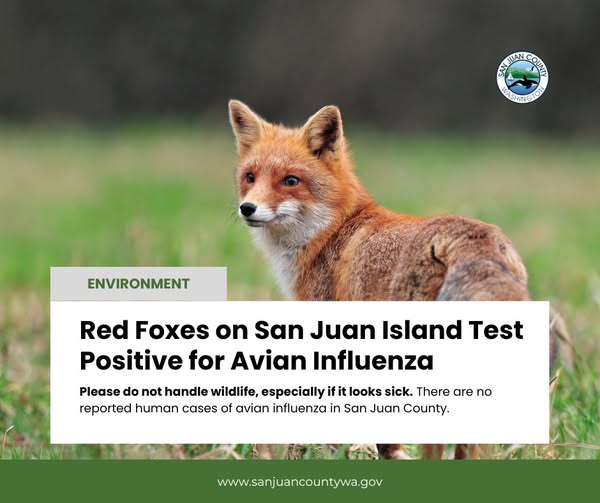
Update from San Juan County Public Health: Red Foxes on San Juan Island Test Positive for Avian Influenza
Insert taken from the county website, click the button below to access the full article:
SAN JUAN COUNTY, WA. February 20, 2026 – Two red foxes on San Juan Island have tested positive for avian influenza. At this time there are no confirmed human cases of avian influenza in San Juan County. Living in the islands gives us the special chance to be close to nature and wildlife but it is important to take simple steps to help keep ourselves, our families, and our pets safe from diseases that animals may carry.
Please do not approach, touch, or try to help wild animals – even if they look calm or friendly. Wild animals can carry diseases that can spread to people and pets, like avian influenza, rabies, and more. For your safety, keep a safe distance and report sick or dead wildlife to local officials.
Here is how to report both wild and domestic sick or dead birds and wildlife:
- Report sick/dead domestic birds using the online form, or call the Washington State Department of Agriculture’s Avian Health Program: 1-800-606-3056. Visit Avian Influenza | Washington State Department of Agriculture for more information about how to protect backyard flocks.
- Use an online form to report sick/dead wild birds or other wildlife suspected of avian influenza to the Washington Department of Fish & Wildlife
Avian influenza, also known as bird flu, is a disease caused by avian influenza Type A viruses that naturally occur in wild aquatic birds throughout the world. This virus can also infect other species of birds, and occasionally mammals, and can cause severe disease in poultry species such as chickens, turkeys, pheasants, quail, ducks, geese, or guinea fowl. Avian influenza viruses can spread to backyard flocks through interactions with wild birds or contaminated environments. Multiple species of wild migratory birds are known to carry the virus and travel through San Juan County each year. It can be fatal to both wild birds and domestic poultry. Because of this risk, it is important to prevent wild birds and other wildlife from coming into contact with your poultry.
On rare occasions, bird flu viruses can infect people and make them sick. Most instances of people becoming infected have happened after prolonged, close contact with infected animals or environments contaminated with avian influenza. The majority of reported cases of human illness due to avian influenza in the United States have been mild, but illness can be severe and, rarely, lead to death.
Avian influenza infections in people are rare and risk to the public remains low. However, people who have or have had close contact with infected animals, such as backyard flock keepers, people who work with animals, and hunters, may be at higher risk. Here are tips to reduce your risk of infection:
- Do not handle wild birds and wild animals. Observe from a distance, if possible. Wild birds and other wild animals can be infected with avian influenza viruses even if they don’t look sick.
- Avoid unprotected contact with domestic birds (poultry) or other animals that may be sick, have died, are suspected to have bird flu virus infection, or may have had contact with wild birds.
- Do not touch surfaces that appear to be contaminated with animal feces, raw milk, litter, or other materials contaminated by birds.
- If you need to clean up bird feces, such as underneath a bird feeder or on outdoor furniture, wear gloves and use a disinfectant such as 1 part bleach to 10 parts water or a benzalkonium chloride-based commercial disinfectant (such as Lysol spray or a similar product). Thoroughly wet the area to be cleaned with the disinfectant and allow it to sit for 5-10 minutes before wiping with a disposable cloth or paper towel. Discard used cloths or towels in a sealing trash can. Wash hands with soap and water immediately.
- Do not prepare or eat raw or undercooked meat or related food products, such as unpasteurized (raw) milk or raw cheeses.
- If you have a backyard bird flock and suspect some of your birds may have avian influenza virus, take extra precautions to keep yourself safe.
- If you are a hunter who handles wild birds, practice good hygiene to prevent any potential disease spread. Wear disposable gloves and dress game birds in the field when possible. It is extremely unlikely that hunters or people feeding wild birds will contract bird flu, but taking common-sense precautions is recommended to reduce the risk of contracting any wildlife disease.
- Speak with your medical provider about getting the seasonal flu vaccine. It is especially important that people who may have exposure to sick birds get a seasonal flu vaccine. While the seasonal flu vaccine will not prevent infection with bird flu viruses, it will reduce the risk of getting sick with human and bird flu viruses at the same time. Co-infection is dangerous because it increases the chance that the two viruses could combine and create a new, greater human health hazard.
- For pet owners: Cats that ingest infected birds, dead infected animals, or that are fed contaminated raw pet food or milk are especially vulnerable to bird flu. Some infected cats become very sick, and in some cases exhibit neurologic signs and die. Some cats will recover from the virus. If you suspect your cat or pet may have avian influenza, contact your veterinarian, who will then contact Washington State Department of Agriculture Animal Health. Make sure to tell your veterinarian if your pet had known or suspected contact with another avian influenza infected animal or person so they can take appropriate precautions.
Thank you for doing your part to keep yourself, your loved ones, and your community safe.